Transporting heavy conservation equipment into remote island environments has traditionally required significant manual effort, careful logistics and large amounts of time.
For this Fiordland operation, Pro Vision used DJI FlyCart drone technology to deliver heavy traps directly from a boat to field teams working on remote islands. The result was a safer, faster and more efficient way to place traps in difficult terrain, without teams having to carry heavy loads up steep hillsides.
Conservation teams needed to move and install heavy traps in remote island locations.
Each trap weighed around 10 to 15 kilograms, and under conventional methods these would normally be carried by field teams on their backs, over steep and difficult ground, before being set in place.
This created several operational challenges:
The client needed a safer and more efficient way to get traps onto site without placing the physical burden on the field crews.
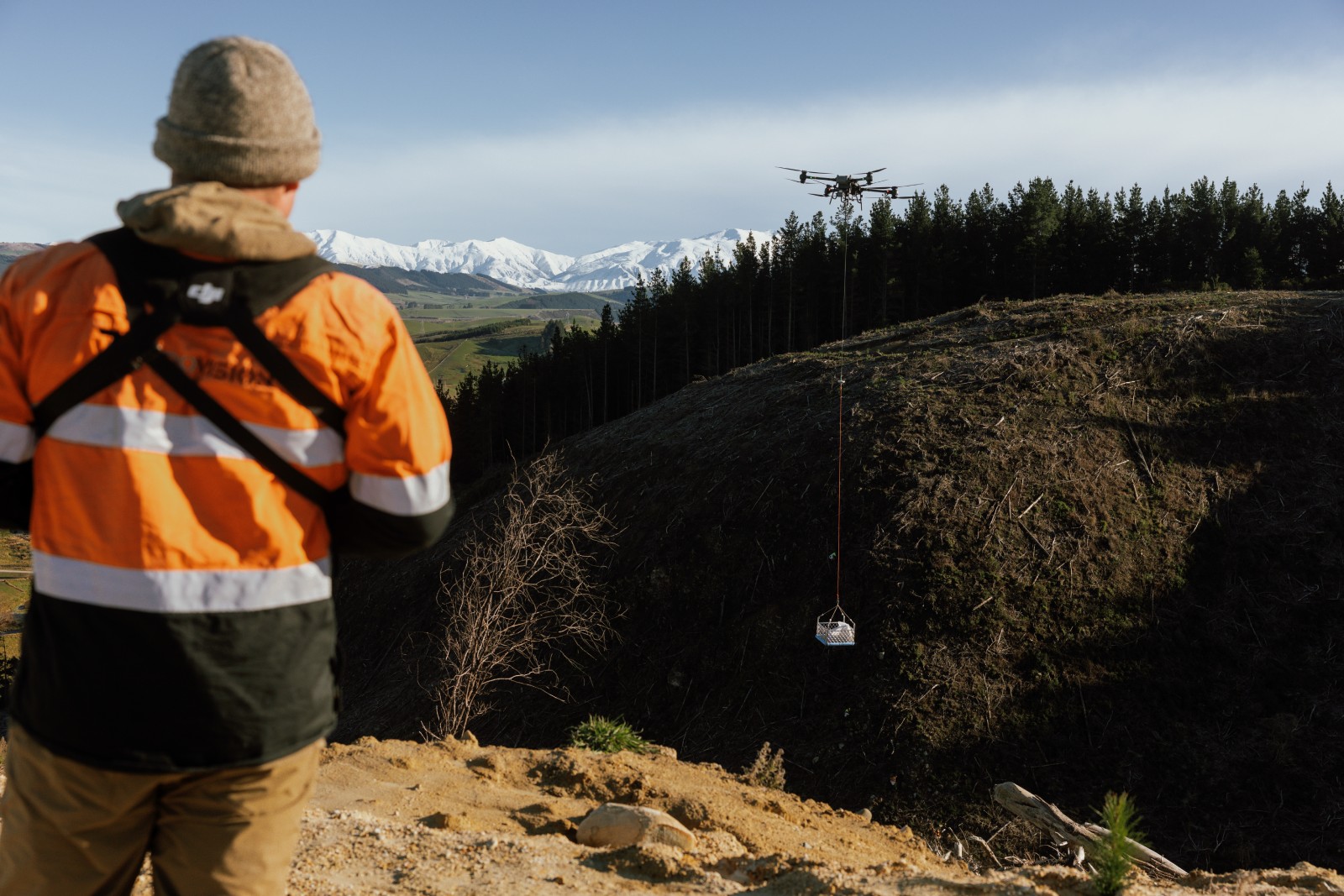
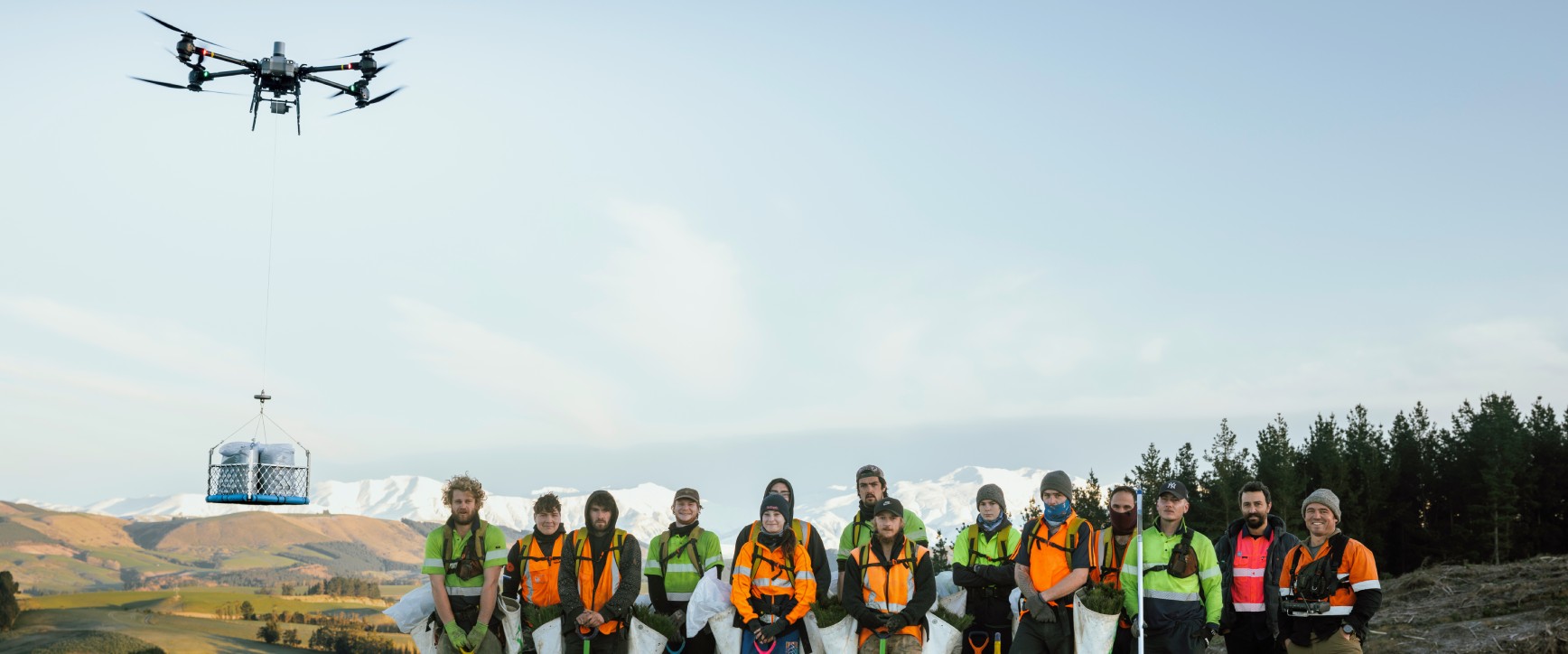
Pro Vision used a DJI FlyCart lifting drone to transport traps directly from the boat to the teams working on the island.
The operation had been a long-term goal: to work from the back of a boat and use drone technology to deliver traps into remote conservation environments. As the technology evolved, that vision became achievable, and this project turned it into a practical field operation.
Detailed planning underpinned the work. Pro Vision prepared waypoint files in advance so the team knew where every trap was destined to go. Daily team movements were planned carefully, and strict safety briefings were carried out before the operation began.
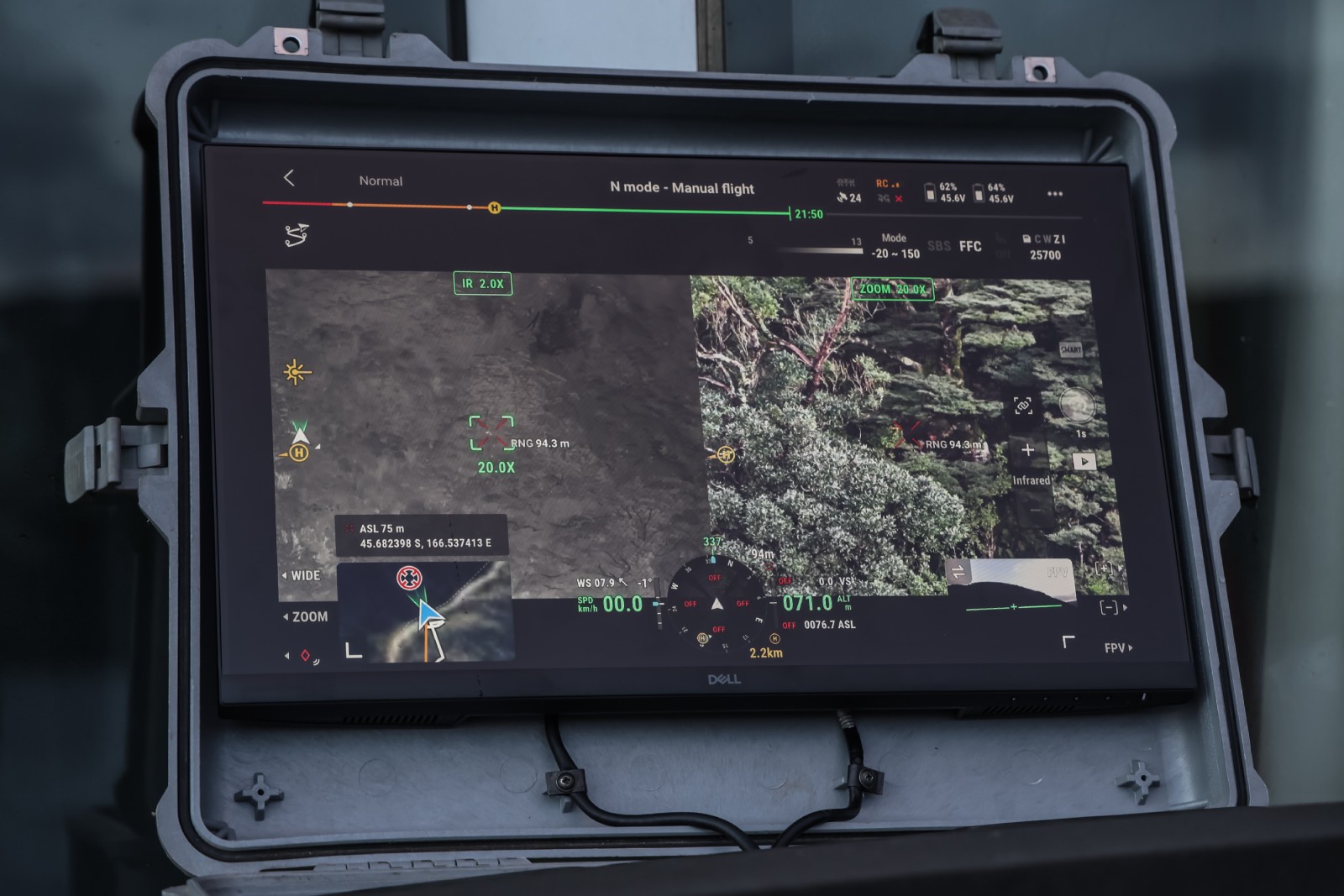
Once teams were in position, they could radio back to the boat using two-way radios. The drone was then flown to their location, through gaps in the canopy, and the traps were lowered directly to the ground for safe detachment and installation.
The drone would then return to the boat, collect the next load and repeat the process.
The most significant point of difference in this operation was the removal of manual carrying.
Traditionally, field teams would have been required to carry each 10 to 15 kilogram trap across challenging hillsides. On this job, that burden was almost entirely eliminated.
As described in the video, the teams did not have to carry a single trap by hand. Instead, the drone delivered the loads directly to them through the trees and canopy.
This reduced physical strain on the crews and allowed them to focus on trap placement rather than transport.
Remote island environments can be difficult to access and even harder to work in precisely.
The use of pre-planned waypoints, coordinated radio communication and controlled lowering through openings in the canopy allowed Pro Vision to deliver traps accurately to teams on the ground.
This level of precision was especially valuable in an environment where terrain, vegetation and remoteness would normally slow the work considerably.
The operation was described as a major success.
By using the FlyCart drone, Pro Vision was able to:
Most notably, the team reported that the work completed in a single day would normally have taken a crew around a week to achieve.
That makes this a particularly strong example of drone technology delivering not just convenience, but a major operational improvement.
The project also highlighted the wider potential of heavy-lift drone technology in the conservation sector.
For teams that regularly work in difficult landscapes, the ability to move equipment accurately and safely without relying entirely on manual labour can make a significant difference to both efficiency and resourcing.
The operation demonstrated clear benefits in reduced manpower demands and potential savings for government organisations, while also showing how emerging drone technology can be incorporated into real-world field operations.
For Pro Vision, this Fiordland project was more than a successful one-off lift operation. It was proof that a long-held vision could work in practice, and that the technology is now ready to support a broader range of conservation applications.
As lifting drone platforms continue to improve, there is strong potential to refine these processes further and expand their use across remote conservation projects throughout New Zealand.
This project showed that heavy-lift drones can do far more than move equipment. In the right setting, they can transform how remote field operations are planned and carried out.