Moving large quantities of seedlings across steep forestry sites is physically demanding, time-consuming and difficult to manage safely.
For this New Zealand forestry operation, Pro Vision used heavy-lift drone technology to deliver seedlings directly to planting crews working across a steep hillside. Instead of carrying a full day’s supply down the slope, workers could request new loads by radio and have the seedlings lowered directly to their location.
The approach reduced manual carrying, improved morale and helped planting crews achieve at least 50 per cent more output in difficult terrain.
On a conventional planting operation, workers may begin the day carrying multiple bags of seedlings down the hillside.
Each planter could carry several bags at once, tied together and slung over both shoulders. On a steep forestry face, that meant navigating a long descent while heavily loaded, followed by repeated movement back across difficult ground.
The process created several challenges:
The client needed a way to move trees directly to the planting teams without requiring workers to carry large loads across the site.
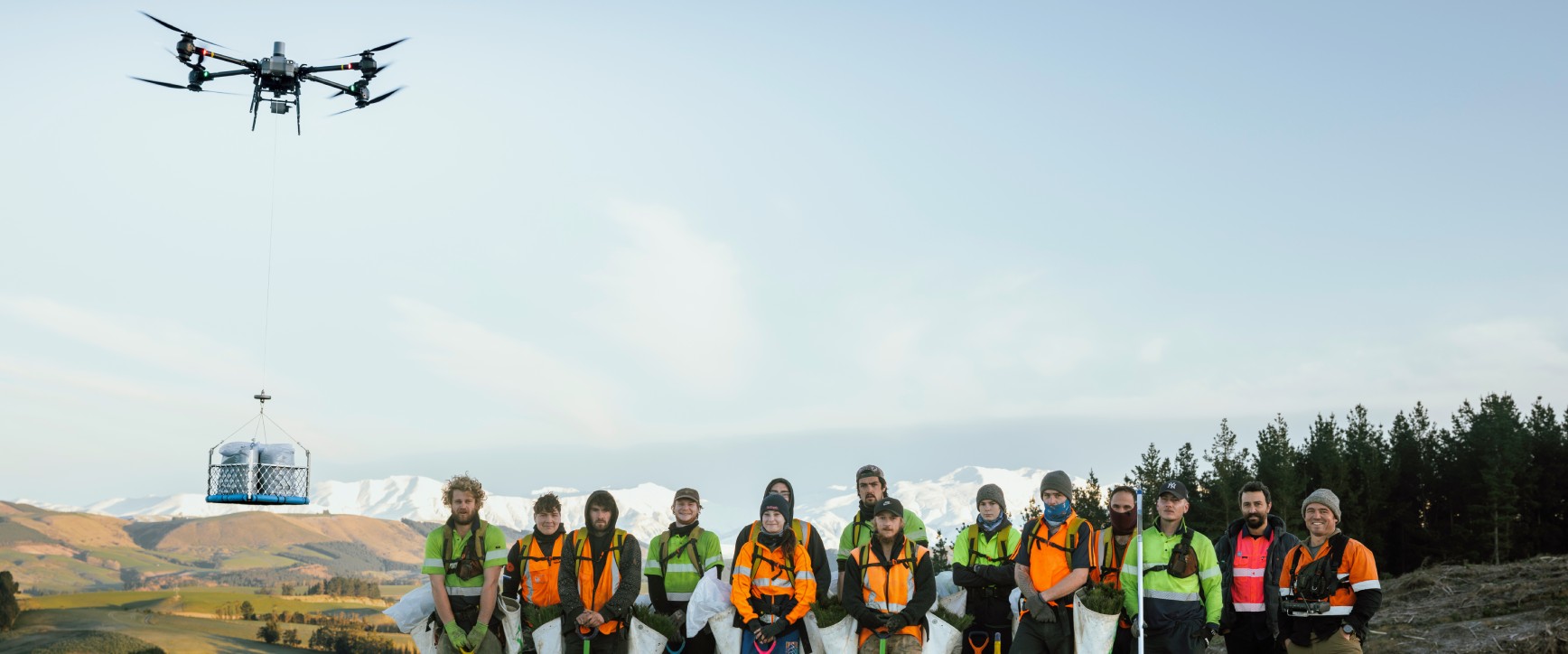
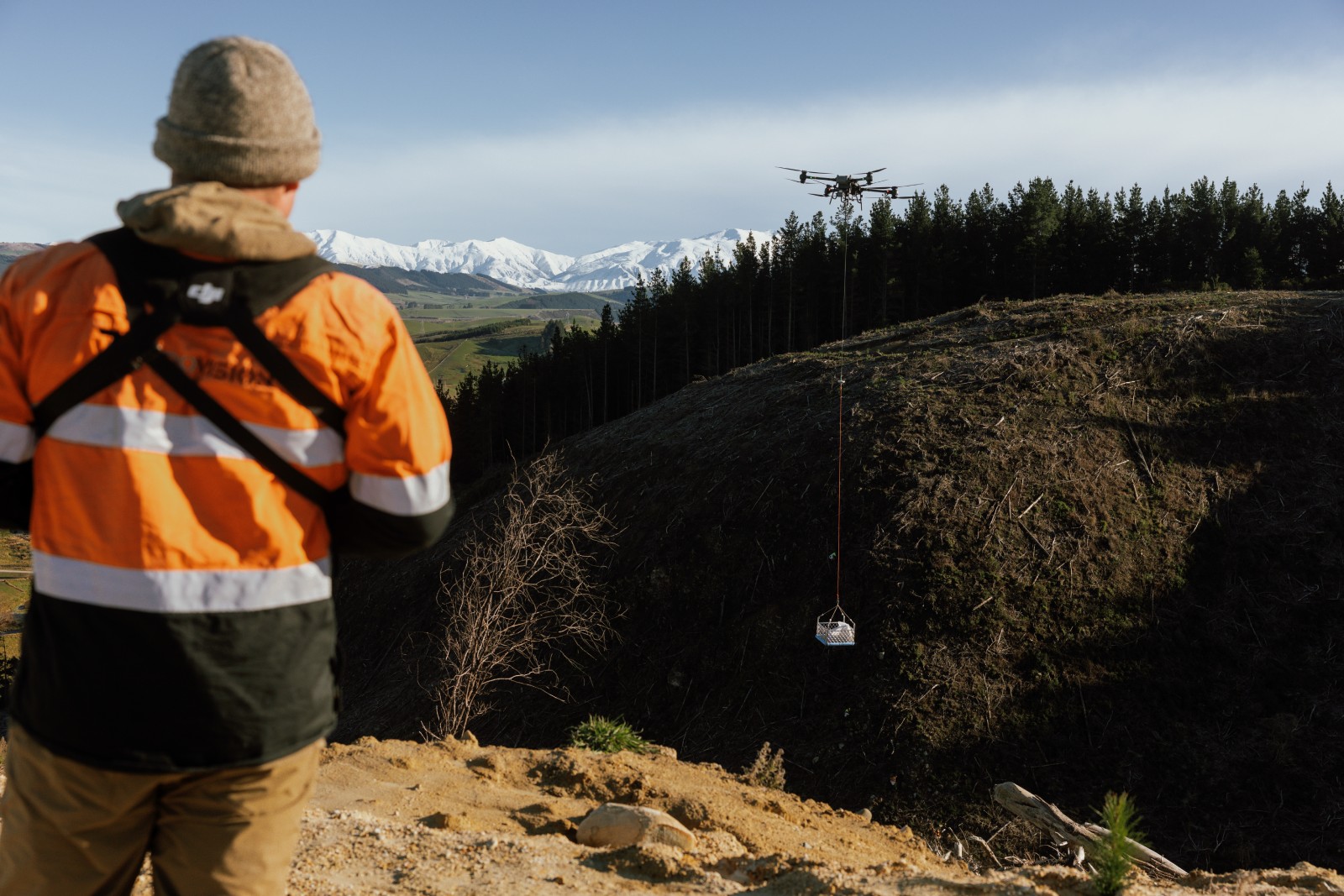
Pro Vision used a heavy-lift drone to transport bags of seedlings directly to workers on the hillside.
Rather than establishing a small number of fixed drop points, the operation was designed to deliver seedlings to the planters themselves.
The crew could begin planting at the bottom of the hill with an initial load. Once they ran out of seedlings, they would radio the drone team, guide the aircraft to their location and receive another delivery directly on the planting line.
The workers could then load the new seedlings into their planting bags and continue immediately.
As one team member explained:
“We chuck 100 trees on, drop to the bottom of the hill, plant across where we run out, radio up, get the drone over and get the bags dropped straight onto us.”
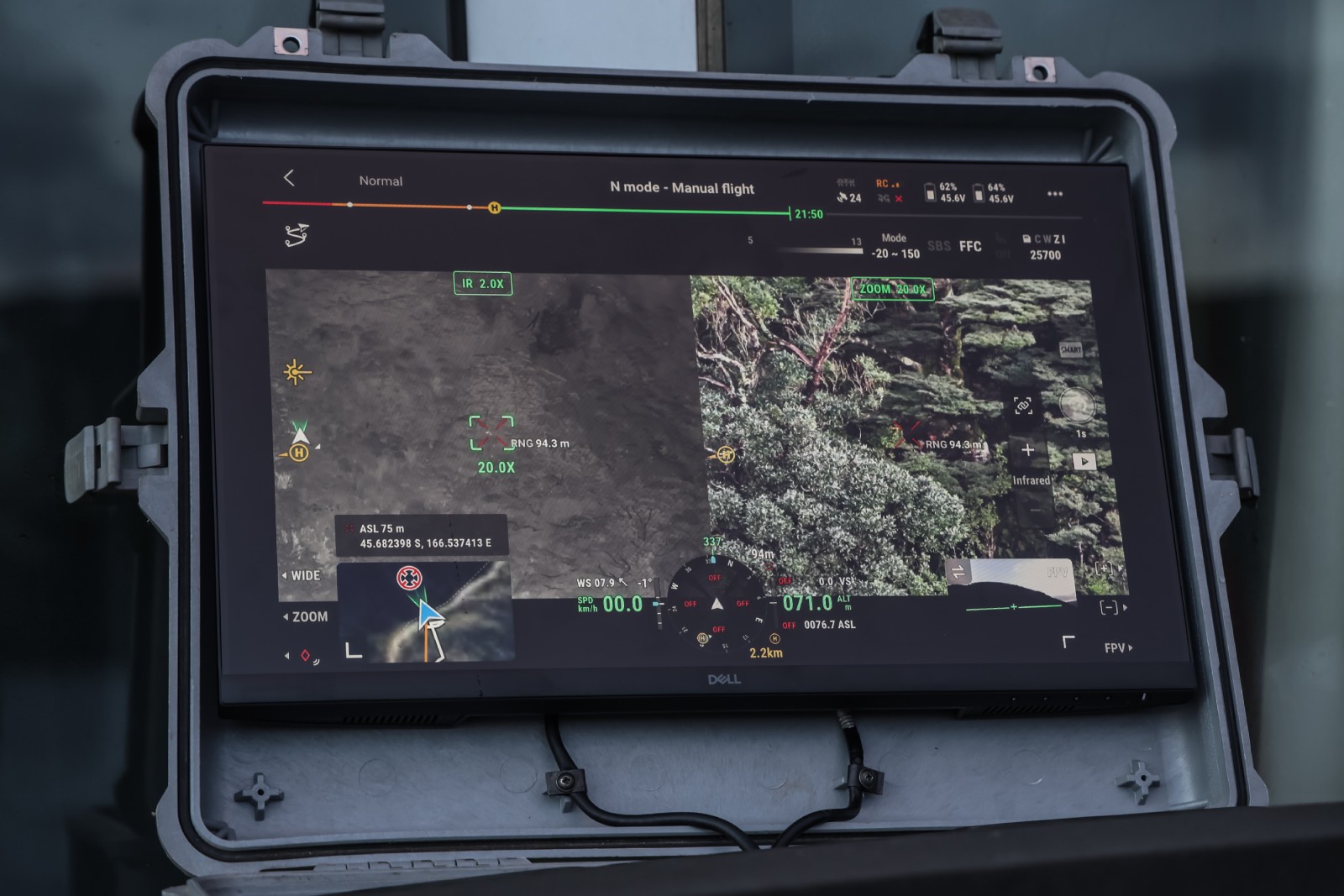
The drone was equipped with an onboard scale system, allowing the operator to confirm the weight of every load.
Loads of up to 40 kilograms could be carried safely in the operating environment. Depending on the seedling configuration, this represented as many as 400 trees in a single flight.
This gave the team flexibility to make smaller, targeted deliveries or move a larger quantity of seedlings when conditions allowed.
The controlled weighing system also helped ensure that every load remained within the drone’s safe operating limits.
The most immediate benefit was the reduction in the amount of weight workers had to carry down the hill.
Traditionally, planters would carry much of the stock required for the day on their shoulders. With the drone supporting the operation, seedlings could instead be delivered where they were needed throughout the day.
This reduced fatigue and avoided unnecessary movement across a steep site.
“They’re not having to carry nearly as much down on the hill. Health and safety-wise, on a steep hill like that, that’s a benefit we can’t really measure.”
While not every safety benefit could be expressed as a simple financial figure, the practical improvement for workers was clear.
Early results from the operation indicated a substantial increase in output.
On difficult terrain, the planting crews were achieving at least 50 per cent more than they normally would.
The productivity gain came from several factors:
The system also made it easier to manage differences within the crew. Faster workers could operate further down the slope, while slower workers remained higher up, without each person needing to finish at the same central stock point.
The drone changed not only how seedlings were moved, but how the job felt for the people doing it.
Steep forestry terrain remained physically demanding, but the removal of heavy carrying made the work less daunting. Workers were less tired and could focus more of their energy on planting.
The team reported improved morale and a positive response from both the planting crew and the client.
The drone-assisted operation enabled Pro Vision to:
The project demonstrated how heavy-lift drones can support forestry operations by solving one of the industry’s most persistent practical challenges: getting large numbers of seedlings safely and efficiently to crews working in hard-to-access locations.
For forestry businesses, drone lifting offers more than faster transport.
It allows seedlings and other supplies to be delivered in response to the crew’s actual progress, rather than requiring workers to carry everything they may need at the start of the day.
By combining accurate load management, direct communication and targeted delivery, Pro Vision created a more flexible planting system that supported both productivity and worker wellbeing.
The operation showed the potential for heavy-lift drones to become a valuable tool across the forestry industry, particularly on steep and challenging sites where traditional transport methods place the greatest burden on planting crews.