Managing New Zealand’s wild animal populations is necessary for environmental protection and animal health, but traditional culling programmes are generally a direct cost to the organisations carrying them out.
Pro Vision worked with a field team to trial a different model: using heavy-lift drones to recover culled tahr from steep mountain terrain so the meat could potentially be sold rather than left in the field.
The operation demonstrated that drones could reach hunters on difficult faces, lift processed animals directly from the site and remove one of the largest barriers to productive wild game recovery.
New Zealand has significant populations of wild ungulates in remote mountain environments.
Controlling these animals is important for protecting native ecosystems and maintaining healthy animal populations. However, the conventional culling model comes at a cost, and recovering animals from the terrain they inhabit can be extremely difficult.
Tahr are often found on wild, steep and inaccessible faces. Hunters may be able to reach and cull the animals, but carrying the carcasses out on foot can be impractical or nearly impossible.
The project therefore needed to address two connected challenges:
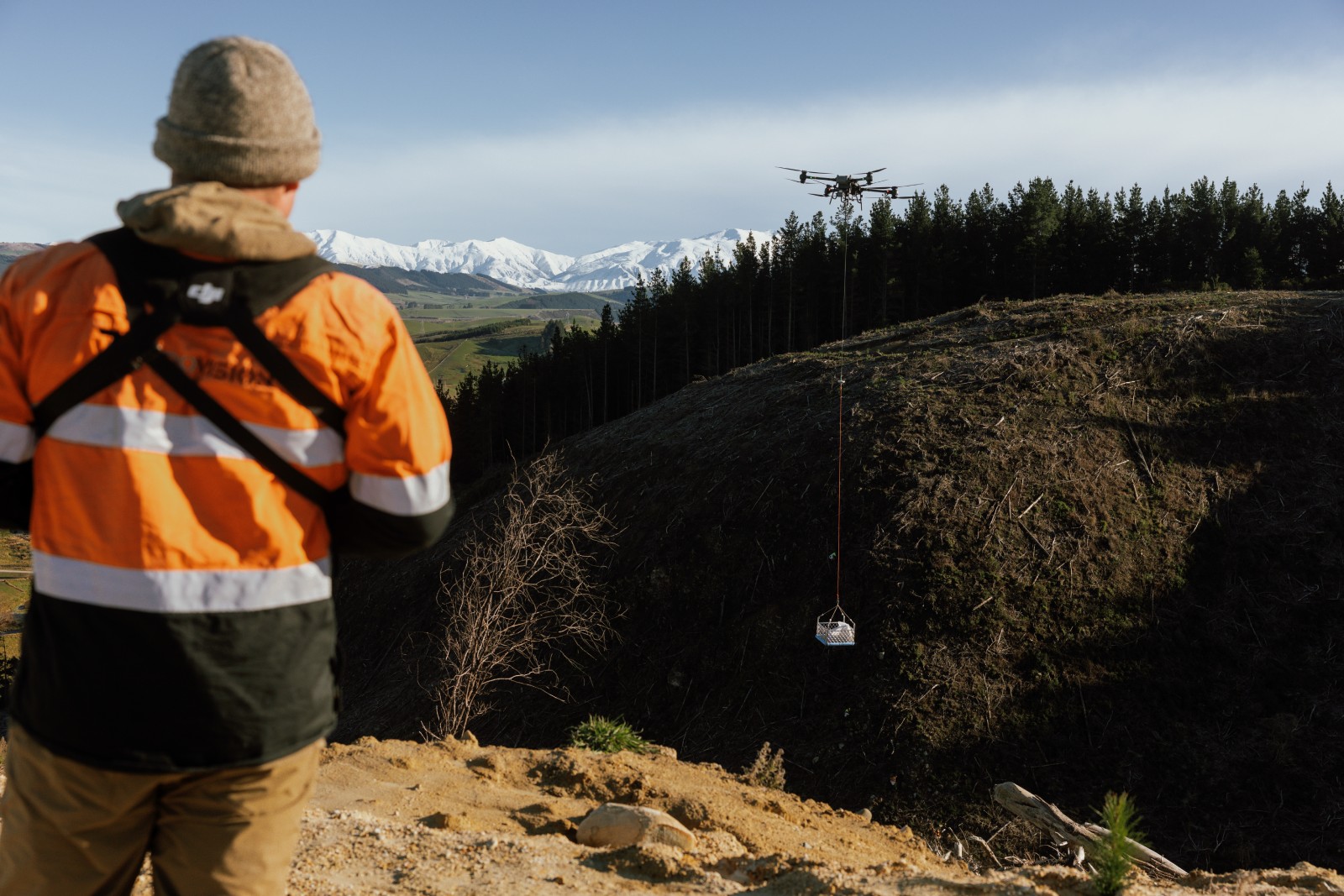
The concept was to use heavy-lift drones as the connection between hunters on the ground and a practical collection point.
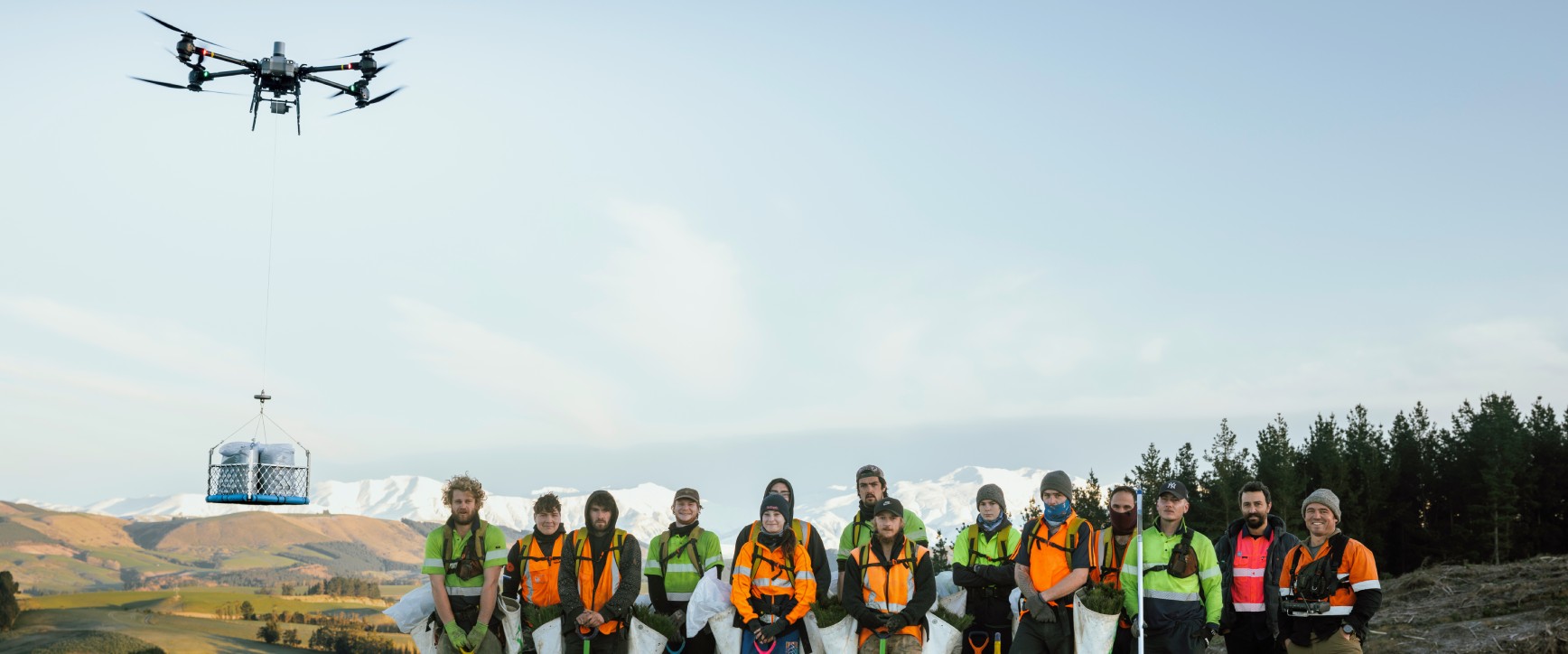
The hunters still undertook the most physically demanding part of the operation. They walked into the terrain, located the tahr and carried out the culling work.
Once an animal was down, it was cleanly gutted and processed onsite. The drone was then flown directly to the hunters’ location, where the animal could be attached to the lifting system and flown out.
The hunters could immediately continue through the area in search of the next animal rather than attempting a difficult manual recovery.
A key question before the operation was whether the drone could reach the places where the tahr were being found.
The terrain was steep, rugged and difficult to move through. However, the aircraft was able to operate effectively across the mountain faces and reach the field team where required.
As the team moved through the valley, the drone operation could relocate and continue lifting animals from different positions.
This flexibility was critical because the recovery points were determined by where the animals were located, rather than by easy access or established landing areas.
Without aerial support, recovering the animals on foot would have been extremely difficult.
Hunters would have needed to move heavy carcasses across steep and hazardous ground, adding substantial effort after already walking into remote terrain and carrying out the culling work.
The drone could instead fly directly above the hunters, lower the lifting equipment and carry the animal away with minimal additional physical effort from the ground crew.
“If we required these guys on the ground to recover these animals on foot, it would be near impossible.”
Removing this recovery burden allowed the hunters to focus on the skilled work they were there to perform.
The wider aim of the project was to explore whether wild animal control could move beyond a purely cost-based model.
By recovering the meat and making it available for sale, the operation could potentially offset some of the costs associated with culling.
The long-term commercial model still needed to be tested and the numbers confirmed. However, the goal was to determine whether the approach could eventually become cost-neutral or potentially generate a return.
This would create value from animals that still needed to be removed for environmental and animal health reasons.
The trial showed that heavy-lift drones could successfully support feral animal recovery in steep New Zealand mountain terrain.
The operation enabled the team to:
The project addressed a long-standing practical challenge: how to recover wild game from locations that hunters can access, but from which carrying an animal out is not realistic.
Drone-assisted recovery has the potential to improve both the efficiency and economics of feral animal control.
It does not remove the need for skilled hunters or careful onsite processing. Instead, it provides an effective transport method once the animal is ready for recovery.
By combining conservation outcomes, field expertise and heavy-lift technology, this model could help organisations control wild animal populations while recovering more value from the work.
For Pro Vision, the operation demonstrated that drone lifting could be a genuine game changer for feral animal recovery in New Zealand’s most challenging landscapes.